Despite the optimistic hiring outlook for the next year, 91% of U.S. companies expect to face challenges, including 45% of hiring managers who say they have open positions they cannot fill. (more…)
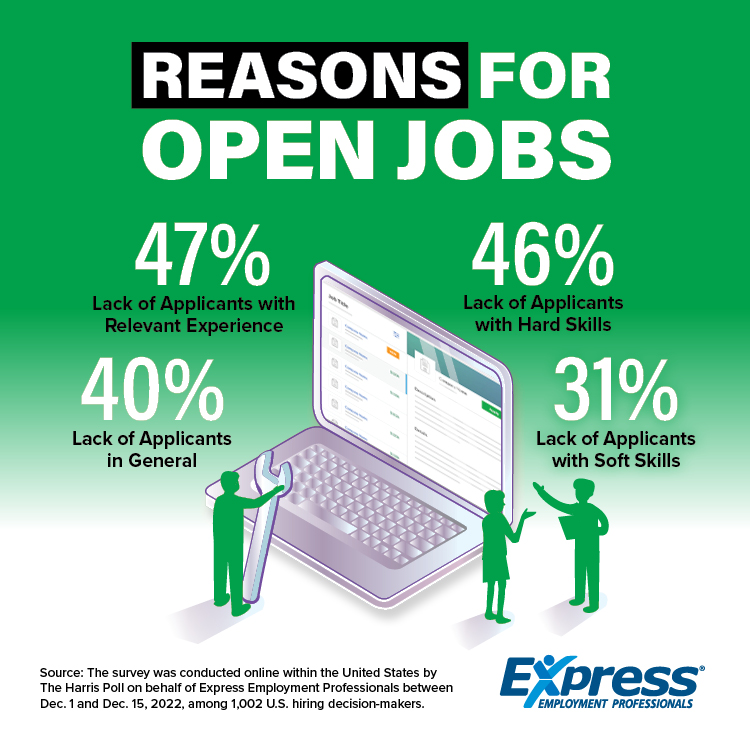
Despite the optimistic hiring outlook for the next year, 91% of U.S. companies expect to face challenges, including 45% of hiring managers who say they have open positions they cannot fill. (more…)

Leaders across industries have a unique opportunity to not just focus on productivity and overall workforce management, but they have a chance to truly inspire their teams to be the best versions of themselves. And while the age-old saying of “waiting for inspiration to strike” may be the way many view inspiring others; it may […]
Over the past few years, the workforce as changed drastically. While some embraced remote work and flexible hours, others have considered other options to remain competitive during a tight labor market. In this month’s question, we’d like to know if you or your company would support a 4-day workweek. Let us know by voting in […]
Express Employment Professionals was recently recognized for its exemplary client services with the receipt of ClearlyRated’s Best of Staffing® Client Award for the fourth consecutive year and 10th year overall. (more…)

Every leader has specific traits and characteristics that help build a cohesive set of skills needed to successfully manage a team. And while no two leaders are alike, they do possess similar qualities that, when utilized effectively, help their employees flourish in their roles. From strong communication to empowering others to effective conflict management, each […]

With Valentine’s Day being celebrated this week, you may be spending a little more time shopping for chocolates and gifts than normal. According to a study, consumers spend $21.8 billion annually on this holiday. In fact, $4.1 billion goes to jewelry purchases, whereas $2 billion is spent on flowers and candy each. However, there’s one aspect […]

Office Services positions are the backbone of businesses across North America. From administrative and customer service to office managers and bookkeepers, having talented professionals in these important positions is imperative to maintaining productivity, ensuring continued success, and creating a well-rounded environment for all your staff members. And while there has been a push for AI […]
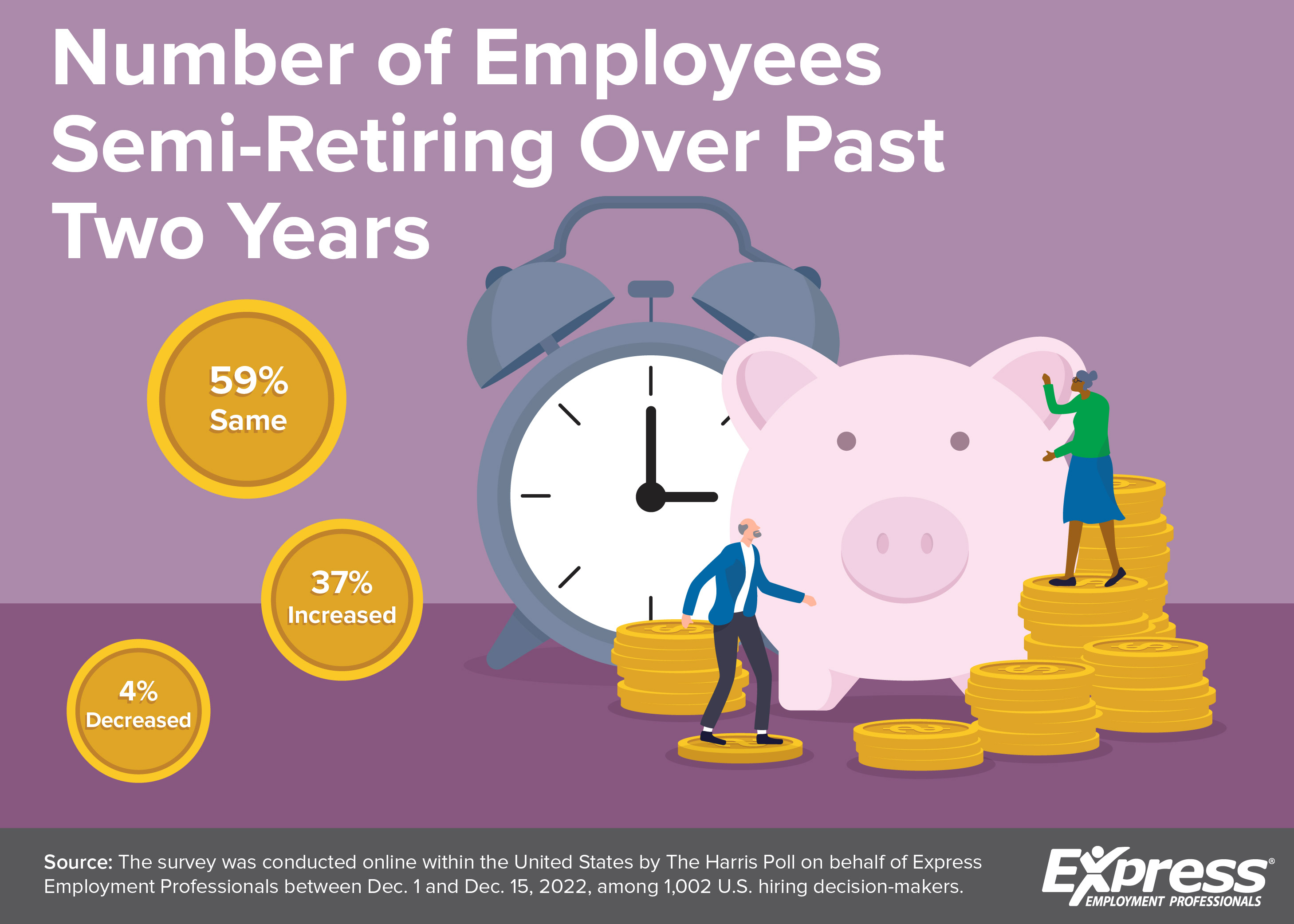
With employee turnover showing no signs of slowing down, offering older workers a chance to delay full retirement may help slow the exodus—even if only momentarily, according to a survey from The Harris Poll commissioned by Express Employment Professionals. Retiring employees are expected to account for 28% of turnover in 2023, with U.S. hiring managers […]

We live in a post-pandemic world, and job seekers have had to adapt to a new way of job searching, including how they prepare for and participate in interviews. Since the pandemic, many companies have used virtual interviews, and Teams and Zoom interviews appear to be here to stay. According to a recent survey of employers by […]

Everyone—employers, employees, policymakers, nonprofit leaders, and educators—plays a role in addressing issues caused by barriers in today’s modern job market. It’s not just individuals’ livelihoods that are at stake. It’s the strength of the overall economy. (more…)